5050 Quorum Dr Suite 700, Dallas, TX 75254
  Open 24 Hours




Check These First (Before Calling Anyone)
1. Your air filter. A clogged filter restricts airflow so severely that the system essentially chokes — it runs but can’t move enough air across the evaporator coil to cool your home. Pull the filter out. If it’s visibly gray or blocked, replace it and give the system 30 minutes to recover. This resolves the problem more often than most homeowners expect.
Replace filters monthly during peak cooling season in Dallas — June through September. When your system is running 8–10 hours a day, a filter designed to last 90 days fills up much faster.
2. Your thermostat. Confirm it’s set to COOL (not FAN), and that the set temperature is below the current room temperature. An older thermostat out of calibration can display the wrong temperature. If you suspect the thermostat, a technician can verify calibration in a few minutes.
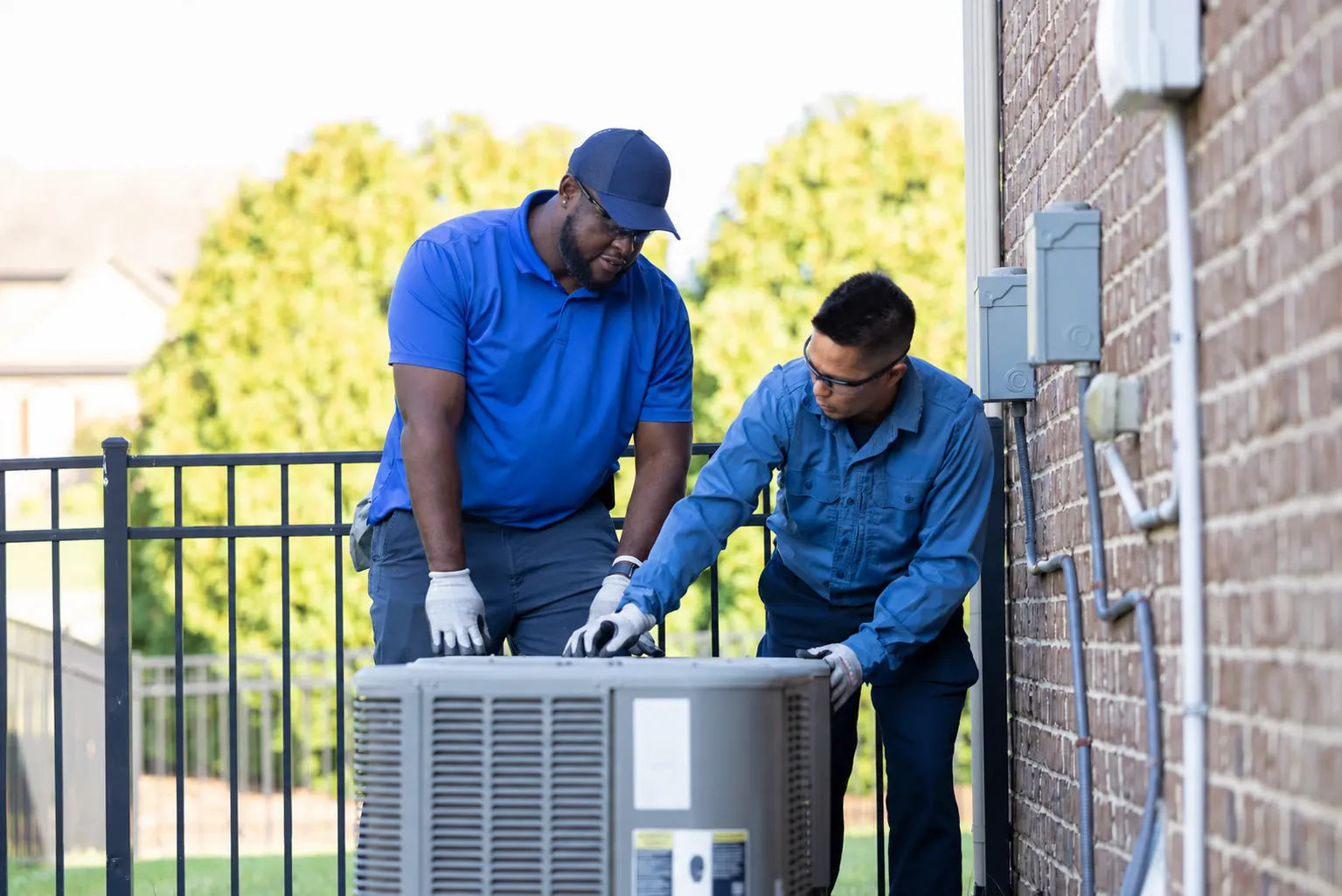
3. The outdoor unit’s power. Check that the outdoor condenser unit is actually running — you should see the fan blade spinning. If the outdoor unit isn’t running but the air handler inside is, the problem is in the outdoor unit and needs a technician.
What Needs a Technician
Dirty condenser coils. The outdoor unit’s coils are where your system dumps the heat it pulls from your home. When those coils get caked with dust, cottonwood seeds (common in DFW springs), or debris, the system can’t reject heat efficiently — and your house stops cooling even though the system is running. Coil cleaning requires the right tools and involves working around refrigerant lines.
Frozen evaporator coil. If you hear the system running but air from the vents is barely moving, check the indoor unit. A frozen evaporator coil — a block of ice around the coil — blocks airflow completely. The immediate fix is turning the system to FAN ONLY for several hours to let it thaw. But the underlying cause (low refrigerant, restricted airflow, low outdoor temperatures) needs diagnosis. A refreezing coil after thawing means a technician visit.
Low refrigerant. Refrigerant doesn’t “run out” under normal circumstances — low refrigerant means there’s a leak somewhere in the system. Signs include ice on the copper refrigerant lines, a hissing sound near the outdoor unit, or the system running constantly without reaching temperature. Adding refrigerant without finding and fixing the leak is a temporary fix. An EPA-certified technician needs to locate the leak, repair it, and recharge to the correct specification.
Capacitor failure. The capacitor is what gives your compressor and fan motor the electrical kick to start. When it fails, the outdoor unit either won’t start at all or starts and immediately shuts off. This is especially common in July and August in Dallas — heat and power fluctuations are the two main things that kill capacitors. A capacitor replacement takes about an hour and is one of the more straightforward same-day repairs.
Why Dallas Summers Are Particularly Hard on AC Systems
When it’s 100°F outside and your system is trying to maintain 74°F indoors, the temperature differential across the condenser coil is enormous. The system has to work much harder than it does in mild weather — which means marginal issues that wouldn’t matter in spring become full failures in July. A slightly dirty coil, a capacitor at 70% capacity, a refrigerant charge that’s 5% low — any of these can tip from “running fine” to “not cooling” when the outdoor temperature climbs.
That’s why a spring tune-up matters more in Dallas than in most cities. Catching the marginal issues in April means you don’t face a failure in August.