Emergency Heater Repair in [CITY]
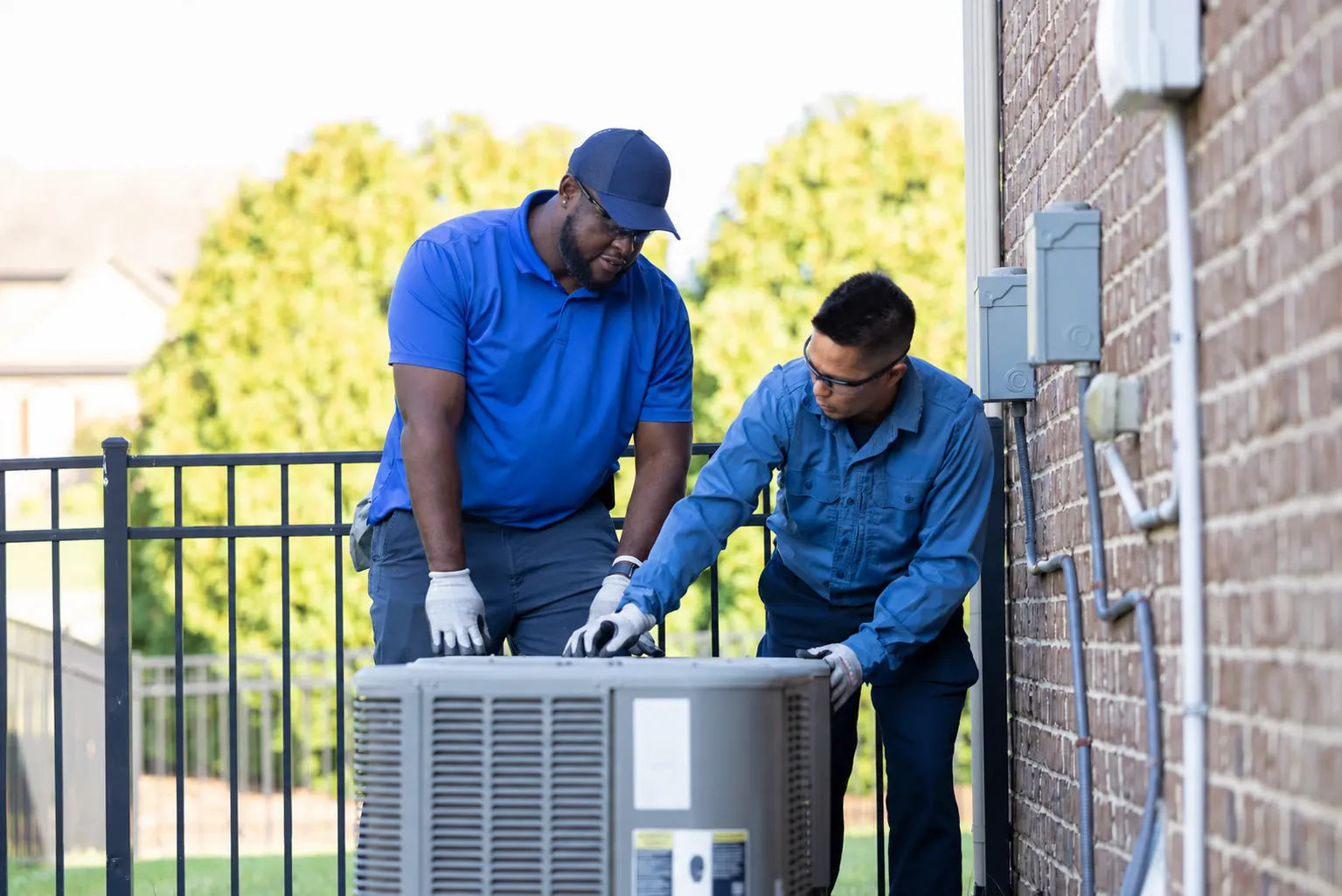
[COMPANY_NAME] is [CITY]'s trusted emergency heater repair team. When your furnace fails during a North Texas cold snap, we respond within 2-4 hours to restore warmth to your home.
Our licensed technicians arrive with fully stocked trucks and can diagnose most heating problems on the first visit. You'll know exactly what's wrong and what it costs before we start any work.
Get your heat back today
[fusion_form form_post_id="XXX"]🚐 [X] technicians available today in [CITY] | Average arrival: 2 hours
⚠️ Smell gas or notice soot? Turn off your system and call immediately
Carbon monoxide is invisible and odorless. Soot buildup, persistent burning smells, or family members feeling dizzy or lightheaded can signal incomplete combustion—a serious safety hazard that requires immediate professional attention.
- Turn off your heating system at the thermostat
- Open windows and doors if you smell gas
- Make sure your CO detectors are working
- Call us or 911 immediately if anyone feels sick
We repair all major heater brands
Our technicians are trained on every major heating system. We carry common parts for most brands, so repairs often happen in a single visit.
Carrier
Trane
Lennox
Rheem
Goodman
American Standard
Bryant
York
What [CITY] homeowners are saying
★★★★★ 5 stars from [XXX]+ Google reviews
[REVIEWER_NAME] [CITY], TX - [DATE]
[REVIEWER_NAME] [CITY], TX - [DATE]
[REVIEWER_NAME] [CITY], TX - [DATE]
[REVIEWER_NAME] [CITY], TX - [DATE]
What's wrong with your heater?
Not sure if you need emergency service or if it can wait? Here's what common heating problems usually mean, what causes them, and typical repair costs. This can help you decide whether to call now or schedule for later.
| Symptom | Likely Causes | Price Range | Urgency |
|---|---|---|---|
| Heater won't turn on | Thermostat issue, tripped breaker, ignitor failure, gas valve problem | $89-450 | Call today—no heat means pipes can freeze in cold weather. |
| Blowing cold air | Pilot light out, flame sensor dirty, gas supply issue, thermostat set wrong | $95-350 | Usually fixable within an hour. Check thermostat settings first. |
| Burning smell | Dust burn-off (normal first use), overheating motor, electrical issue | $150-500 | If smell persists beyond 30 minutes, turn off system and call immediately. |
| Short cycling (turns on/off rapidly) | Dirty filter, faulty thermostat, overheating, flame sensor issue | $95-400 | Reduces efficiency and stresses components. Schedule service this week. |
| Loud banging or popping | Delayed ignition, ductwork expansion, loose components | $150-600 | Often not dangerous but can worsen. Have it checked soon. |
| Squealing or grinding noise | Worn belt, motor bearing failure, blower wheel issue | $200-700 | Indicates mechanical wear. Call before it fails completely. |
| Weak airflow from vents | Clogged filter, blower motor failing, ductwork blockage or leak | $95-500 | Reduces comfort and efficiency. Replace filter first, then call if no improvement. |
| Yellow or flickering pilot light | Incomplete combustion, dirty burner, ventilation issue | $150-600 | Pilot should be steady blue. Yellow indicates carbon monoxide risk. Turn off and call now. |
| Heater runs constantly | Undersized unit, thermostat issue, heat loss (insulation/leaks), failing components | $95-800 | Drives up energy bills. Schedule diagnostic to find root cause. |
Prices shown are typical ranges for the [CITY] area including parts and labor. Your actual cost depends on your specific system and issue. We always provide exact pricing before starting work.
Should you repair or replace your heater?
We'll walk you through the math honestly—no pressure either way
Repair Your Current System
$200-1,200 typical
Usually makes sense when:
- System is under 12 years old
- This is the first major repair
- Only one component has failed
- Repair cost is under 50% of replacement
Advantages:
- Lower upfront cost
- Same-day fix in most cases
- Can extend system life 3-7 years
Considerations:
- May face additional repairs as system ages
- Older systems are less energy efficient
Replace With New System
$4,000-8,000 typical
Usually makes sense when:
- System is 15+ years old
- You've spent $500+ on repairs this year
- Energy bills keep climbing
- Repair would cost 50%+ of replacement
Advantages:
- 10-15 year manufacturer warranty
- 20-30% lower energy bills with modern efficiency
- Reliable heat for years to come
Considerations:
- Higher upfront investment
- Installation takes 1-2 days
[REVIEWER_NAME] - [CITY], TX Google Review - [DATE]
Transparent pricing—know the cost before we start
No surprise bills. Every repair begins with an $89 diagnostic visit where we identify the problem and give you a firm price. If you approve the repair, the $89 is applied to your total. If you decide not to proceed, the $89 is all you pay. If we can't fix it, you pay nothing.
| Service | Price Range | What's Included | Typical Time |
|---|---|---|---|
| Diagnostic Visit | $89 | Full inspection, problem diagnosis, written estimate (waived with repair) | 30-45 min |
| Filter replacement & tune-up | $95-150 | New filter, safety inspection, efficiency check, minor adjustments | 45-60 min |
| Thermostat replacement | $200-450 | New thermostat (basic to smart), wiring, programming, testing | 1-2 hours |
| Ignitor or flame sensor | $250-450 | New component, calibration, full system test, safety check | 1-2 hours |
| Blower motor replacement | $450-900 | New motor, mounting, wiring, airflow testing | 2-3 hours |
| Gas valve replacement | $400-700 | New valve, leak testing, combustion analysis | 2-3 hours |
| Heat exchanger repair/replacement | $800-1,800 | Exchanger work, CO testing, full safety verification | 3-6 hours |
| Complete system replacement | $4,000-8,000 | New furnace, installation, ductwork connections, 10-year warranty | 1-2 days |
Prices shown are typical for the [CITY] area and include parts and labor. Final pricing provided after diagnostic. We always get your approval before starting any work.
💳 Financing available—don't let cost leave you in the cold
We offer financing options for qualified customers so you can get your heat fixed now and pay over time. Ask our technician about payment plans during your diagnostic visit.
We accept all payment methods
What to expect: from your call to working heat
Here's exactly how the process works so there are no surprises. You stay in control at every step.
Call or book online
Tell us what's happening with your heater. We'll schedule a visit—often same-day for emergencies.
5 minutesTechnician arrives for diagnostic
A licensed tech inspects your system and identifies the problem. We'll show you exactly what's wrong.
30-45 minutes | $89 diagnostic feeYou get upfront pricing
We explain your options and provide exact pricing before any work begins. No hidden fees, no surprises.
5-10 minutesYou decide
Approve the repair or take time to think about it. No pressure, no obligation. The $89 diagnostic fee is waived if you proceed.
Your callWe complete the repair
Our tech fixes the problem using quality parts. Most repairs are completed in a single visit.
1-3 hours typicalTest, verify, and clean up
We run your system through a complete test cycle, confirm everything is working properly, and clean up our work area.
15 minutesOur guarantees to you
If we can't repair it, you don't pay
Parts and labor guaranteed for 90 days
The quoted price is your final price
$89 applied to repair if you proceed
Why [CITY] homeowners trust [COMPANY_NAME]
BBB A+ Rated Zero unresolved complaints
State Licensed [LICENSE_NUMBER]
Years serving [REGION]
5-star average [XXX]+ Google reviews
Licensed, certified & insured
- [LICENSE_NUMBER] – Texas HVAC Contractor License (you're protected if anything goes wrong)
- EPA Section 608 Certified – Proper refrigerant handling for heat pumps and dual systems
- Fully insured and bonded
- Background-checked technicians
- Drug-free workplace policy
- Factory training on major brands
[REVIEWER_NAME] - [CITY] [DATE] - Google Review
Service hours & emergency availability
Regular service hours
Open now
Standard hours: 7am-7pm Monday-Saturday
Emergency service: 24/7 for no-heat emergencies
Central Time
After-hours emergencies
No heat and it's after hours? We're on-call around the clock. Standard rates until 8pm, then a $[XX] after-hours fee applies.
We never charge extra for weekends or holidays during regular hours.
[phone_button]🗺️ Emergency heater repair throughout [REGION]
Fast emergency heater repair service covering:
Plus surrounding communities throughout [REGION]
Not sure if we serve your area?
We cover more communities than listed. Call to confirm service in your location.
[phone_button]Ready to get your heater fixed?
Call now or request service online—most repairs completed same day
Common questions about heater repair
Here are honest answers to the questions homeowners ask most often.
How much does heater repair typically cost?
Most heater repairs in the [CITY] area cost between $200 and $800, depending on what's wrong. Simple fixes like replacing an ignitor or flame sensor run $250-450. More complex repairs like blower motor replacement cost $450-900. Heat exchanger work is the most expensive at $800-1,800. We charge a $89 diagnostic fee to identify the problem, and that fee is waived if you proceed with the repair. You'll always know the exact price before we start any work.Why is my furnace blowing cold air?
Why is my furnace blowing cold air?
A furnace blowing cold air usually indicates one of these issues:
- Pilot light is out – On older furnaces, the pilot light may have blown out. You can try relighting it following the instructions on your unit, but if it won't stay lit, the thermocouple may need replacement.
- Dirty flame sensor – The flame sensor detects whether there's actually a flame present. When it gets coated with residue, it can't sense the flame and shuts down the gas valve as a safety precaution. This is a common fix.
- Gas supply issue – Check that your gas valve is in the "on" position (parallel to the gas line). If it's perpendicular, it's closed. Also verify your gas account is active if you recently moved in.
- Thermostat set to "fan only" – Check that your thermostat is set to "heat" and not just "fan." When set to fan only, the blower runs continuously without activating the heating cycle.
- Ignitor failure – Modern furnaces use electronic ignition instead of pilot lights. If the ignitor fails, the furnace can't light the gas burners. This is one of the most common repairs we do.
If checking the thermostat and gas valve doesn't solve it, you'll need a technician to diagnose which component has failed.
Why does my furnace smell like burning?
A burning smell from your furnace can have several causes, some normal and some concerning:
- Dust burn-off (normal) – When you turn on your furnace for the first time each season, dust that's accumulated on the heat exchanger burns off. This creates a brief burning smell that should dissipate within 30 minutes to an hour. This is normal and not dangerous.
- Dirty air filter – A clogged filter restricts airflow, which can cause the system to overheat. The overheating creates a burning smell. Replace your filter and see if the smell goes away.
- Overheating motor – If the blower motor is working too hard due to restricted airflow or worn bearings, it can overheat and produce a burning smell. You might also hear squealing or grinding noises. This requires professional repair.
- Electrical issue – A burning plastic or rubber smell indicates an electrical problem—possibly a wire with damaged insulation or an overheating component. Turn off your furnace immediately and call for service.
- Object in the ducts – Sometimes toys, debris, or even small animals end up in ductwork. When the heat kicks on, these objects can burn and create an odor.
If the burning smell persists beyond the first hour of seasonal use, turn off your system and have it inspected. Electrical burning smells in particular warrant immediate attention.
Why does my furnace keep turning on and off?
When a furnace cycles on and off frequently—called "short cycling"—it typically indicates one of these problems:
- Dirty air filter – This is the most common cause. A clogged filter restricts airflow, causing the furnace to overheat. The high-limit safety switch then shuts it down to prevent damage. Once it cools, it restarts, and the cycle repeats. Replace your filter first—this simple fix solves short cycling in many cases.
- Thermostat malfunction – A faulty thermostat may incorrectly read the temperature or have loose wiring, causing it to signal the furnace to turn on and off erratically. Try replacing the batteries if it's battery-powered.
- Dirty flame sensor – The flame sensor confirms that the burner has ignited. When it's coated with residue, it fails to detect the flame and shuts down the gas valve. The system then restarts and repeats the cycle.
- Blocked exhaust vent – The flue pipe vents combustion gases outside. If it's blocked by debris, ice, or an animal nest, the pressure switch will shut down the furnace as a safety measure.
- Oversized furnace – If your furnace is too large for your home, it heats the space quickly and shuts off, but the heat dissipates fast, triggering another cycle. This is a sizing issue that may require system replacement for proper resolution.
Short cycling wastes energy and puts extra stress on furnace components, leading to premature wear. Start with a filter replacement, and if that doesn't help, schedule a diagnostic visit.
Why is my furnace making a loud noise?
Different furnace noises indicate different problems:
- Banging or popping – Usually caused by delayed ignition (gas builds up before igniting, creating a small explosion) or by metal ductwork expanding and contracting as it heats and cools. Delayed ignition should be addressed as it can damage the heat exchanger over time.
- Squealing or screeching – Indicates a problem with the blower motor or belt. Could be a worn belt that needs replacement, dry motor bearings that need lubrication, or a failing blower motor.
- Grinding – Usually means the blower motor bearings have worn out. The motor will likely need replacement soon. Continuing to run the furnace can cause further damage.
- Rattling – Often caused by loose screws, panels, or components. Could also indicate a cracked heat exchanger, which is a serious safety issue requiring immediate attention.
- Humming – A low hum is normal during operation. A loud hum may indicate an electrical issue or a failing blower motor capacitor.
- Clicking – Some clicking during startup and shutdown is normal. Continuous clicking may indicate a failing ignitor trying repeatedly to light the burners.
Any new or unusual noise warrants investigation. While some causes are minor, others—like a cracked heat exchanger—pose safety risks and require immediate professional attention.
Should I repair or replace my old furnace?
Use these guidelines to help decide:
Repair usually makes sense when:
- Your furnace is under 12 years old
- This is the first major repair needed
- The repair cost is less than 50% of replacement cost
- Only one component has failed
Replacement usually makes sense when:
- Your furnace is 15+ years old (average lifespan is 15-20 years)
- You've spent more than $500 on repairs in the past year
- Your energy bills keep increasing despite maintenance
- The heat exchanger is cracked (this is a safety issue and often costs more to repair than replace)
- Repair would cost more than 50% of a new system
A 12-15 year old furnace is in the gray zone—the right choice depends on the specific repair needed and the overall condition of your system. A trustworthy technician will walk you through the math and help you make the best decision for your situation, not push you toward the more expensive option.
How quickly can you get here for an emergency?
For no-heat emergencies in the [CITY] area, we typically arrive within 2-4 hours during business hours. We dispatch the closest available technician and call ahead with an ETA. True emergencies—no heat, gas smell, or safety concerns—are prioritized for same-day service. After-hours emergencies are handled by our on-call technicians.Do you charge extra for nights and weekends?
Do you charge extra for nights and weekends?
We charge standard rates for all service during regular hours (7am-7pm), including weekends. After 8pm, a $[XX] emergency fee applies. We believe heating emergencies shouldn't come with penalty pricing—when your heat goes out, you need help, and we don't think you should be punished for that.How often should I replace my furnace filter?
How often should I replace my furnace filter?
Filter replacement frequency depends on the filter type and your household:
- 1" fiberglass filters: Replace every 30 days
- 1" pleated filters: Replace every 60-90 days
- 4" pleated filters: Replace every 6-12 months
Replace more frequently if you have pets, allergies, live in a dusty area, or run your system constantly. A dirty filter is the #1 cause of furnace problems—it restricts airflow, causes overheating, and makes your system work harder. Check your filter monthly and replace it when it looks gray or clogged. This simple maintenance step prevents many common repairs.
What should I do while waiting for a technician?
If you smell gas: Turn off the system at the thermostat, open windows and doors for ventilation, leave the house, and call us or 911 from outside. Don't flip light switches or use anything that could create a spark.
If it's just not heating:
- Check your thermostat is set to "heat" and the temperature is set higher than the current room temperature
- Check the furnace power switch (usually looks like a light switch near the unit)
- Check your circuit breaker for a tripped breaker
- Replace your air filter if it looks dirty
- If you have a gas furnace, verify the gas valve is in the "on" position
To stay warm while waiting:
- Use space heaters safely (keep away from flammables, don't leave unattended)
- Close off unused rooms to concentrate heat
- Open curtains during the day for solar heat, close them at night for insulation
- If temperatures will drop below freezing, open cabinet doors under sinks on exterior walls to prevent pipe freezing
Get your heat back today
Licensed technicians • Same-day emergency service • Upfront pricing • Satisfaction guaranteed
Serving [REGION] • [LICENSE_NUMBER] • BBB A+ Rated